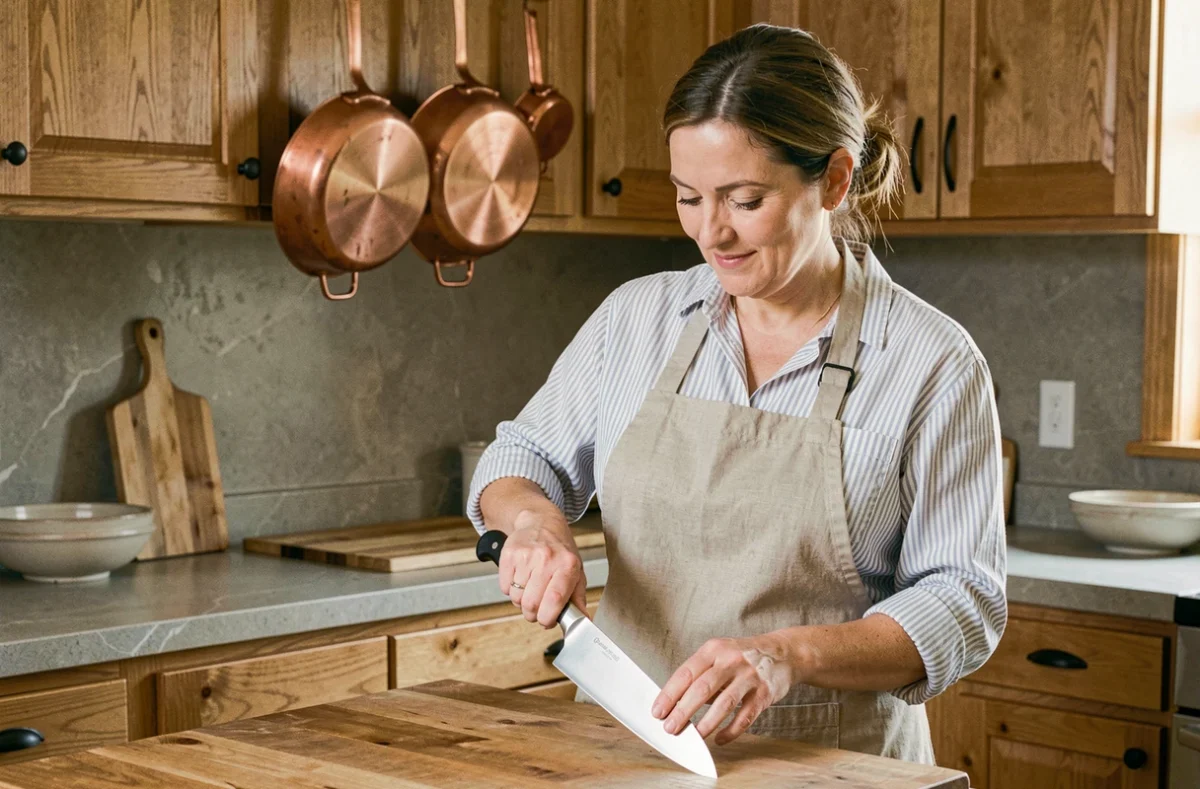
A pan whose coating starts flaking after six months, a food processor for which you can no longer find a replacement bowl seal, a knife that slips on a tomato instead of slicing through it: we’ve all experienced situations like these, turning dinner prep into a source of frustration.
Choosing kitchen equipment means making decisions about durability, material safety, and whether the items you buy can be maintained or repaired. How long equipment lasts, whether it can be repaired, and the materials that come into contact with food matter just as much as the price tag.
Food-contact materials: how regulations are changing the kitchen
When buying a silicone spatula or a flexible baking mold, we rarely think about the product’s chemical composition. Yet Regulation (EU) 2024/3190, adopted on 19 December 2024, governs bisphenol A (BPA), as well as other bisphenols and derivatives, in several categories of food-contact materials: plastics, silicones, rubber, and coatings.
Not all materials are affected in the same way, but the message is clear: it’s worth checking that kitchen utensils comply with regulations before buying them.
There’s often confusion when it comes to nonstick frying pans and saucepans. France’s PFAS law has generated plenty of debate, but cookware was removed from the scope of the ban during parliamentary discussions. In other words, nonstick pans are not banned in France. You can still buy them, as long as you distinguish between sector-specific restrictions (textiles, cosmetics) and the rules that apply to cookware.
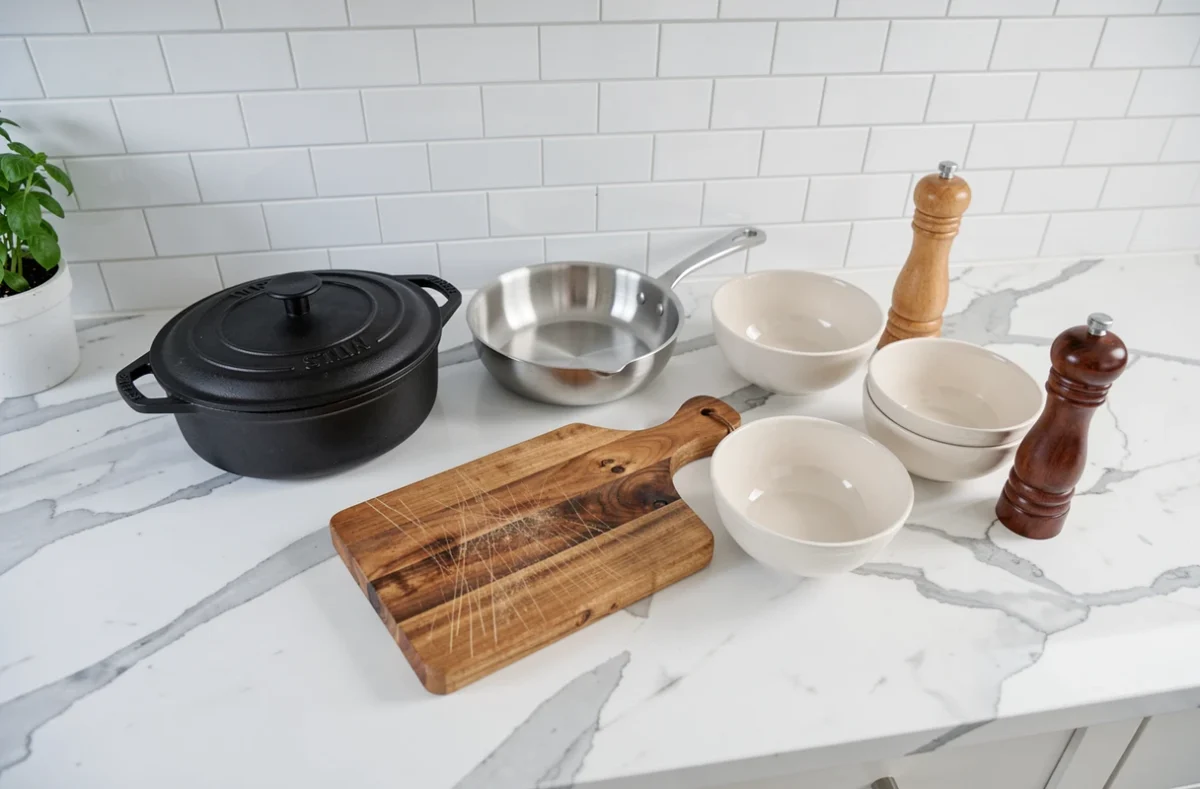
In practice, there are two simple guidelines to keep in mind when choosing cookware. 18/10 stainless steel, cast iron, and iron are reliable choices for cooking: they don’t release organic compounds and can withstand high temperatures without degrading.
Silicone or plastic accessories are worth checking for CE compliance and, where indicated, the label “suitable for food contact.” Browse Yummy Blog’s kitchen equipment to find ranges that clearly display this information.
Repairability index and lifespan: the real buying criteria for small kitchen appliances
We often compare food processors, blenders, and other kitchen appliances based on their power or the number of accessories included. These factors matter, but they can obscure a key consideration: whether the appliance can be repaired if it breaks down.
The repairability index, shown as a score from 1 to 10, is based on several practical factors:
- Availability and price of spare parts (seals, blades, motor units).
- Access to the technical documentation provided by the manufacturer.
- Ease of disassembly, which determines whether the appliance can be repaired by its owner or a repair professional.
In 2024, France’s DGCCRF found issues with how this index was displayed or calculated during its inspections. Checking whether spare parts are actually available on the manufacturer’s website is therefore more reliable than relying solely on the score shown in store. An appliance rated 7/10 whose parts are constantly out of stock is no better than a 5/10 model with a reliable supply of spare parts.
The index is also evolving towards a broader assessment of durability that includes reliability and upgradability. For now, this expanded assessment applies primarily to televisions and washing machines, not food processors. So it can’t yet be relied on for every household appliance.
What this means when choosing a food processor or blender
Before comparing prices, save time by checking three things on the manufacturer’s website: the spare parts catalogue, delivery times for those parts, and how long they’ll remain available after the model is discontinued. A repairable appliance costs less over five years than a disposable one, even if it costs a few dozen euros more upfront.
Knives and cookware: choose fewer, better-quality pieces
Discount knife sets with twelve blades and a wooden block have one obvious drawback: you end up using the same two knives, while the other ten take up space in the drawer. A paring knife, a chef’s knife, and a bread knife cover almost all everyday needs.
What makes the difference isn’t the number of knives, but the quality of the steel. High-carbon stainless steel holds its edge longer and is easy to sharpen with a honing steel or a fine-grit stone. A good knife, properly maintained, lasts for decades, while a budget knife loses its edge within months and ends up at the back of a drawer.

Frying pans and saucepans: match the material to how you actually cook
You don’t need five frying pans. Two are enough for most kitchens: a medium-sized pan for quick cooking (eggs, sautéed vegetables, fish fillets) and a larger one for family meals. The right material depends on how often you cook and the methods you use.
- Stainless steel is suitable for high-temperature cooking and deglazing. It requires a little fat and careful control of the heat.
- Enameled cast iron is ideal for slow-cooked dishes and oven cooking. Its weight makes it less convenient to handle every day, but its longevity more than makes up for it.
- Nonstick cookware is still useful for delicate, low-temperature cooking. Choose models with a thick base, which are more resistant to warping and coating wear.
The base of a saucepan or frying pan is often overlooked. A base that’s too thin heats unevenly, creates hot spots, and speeds up coating deterioration. A thick, even base improves cooking performance and extends the lifespan of the cookware.
Plan your kitchen equipment purchases without cluttering your cupboards
Accumulating equipment doesn’t make cooking more enjoyable. You’ll get more out of choosing a few versatile pieces than buying a growing collection of specialist accessories. A stainless steel stockpot can replace a soup pot, sauté pan, and baking dish for most everyday recipes.
Before each purchase, ask yourself one simple question: will this utensil replace a task I do at least twice a week? If the answer is no, it’ll end up tucked away behind the stack of Tupperware. The most functional kitchen is often the least cluttered, with pieces chosen for their durability, versatility, and transparent material information.