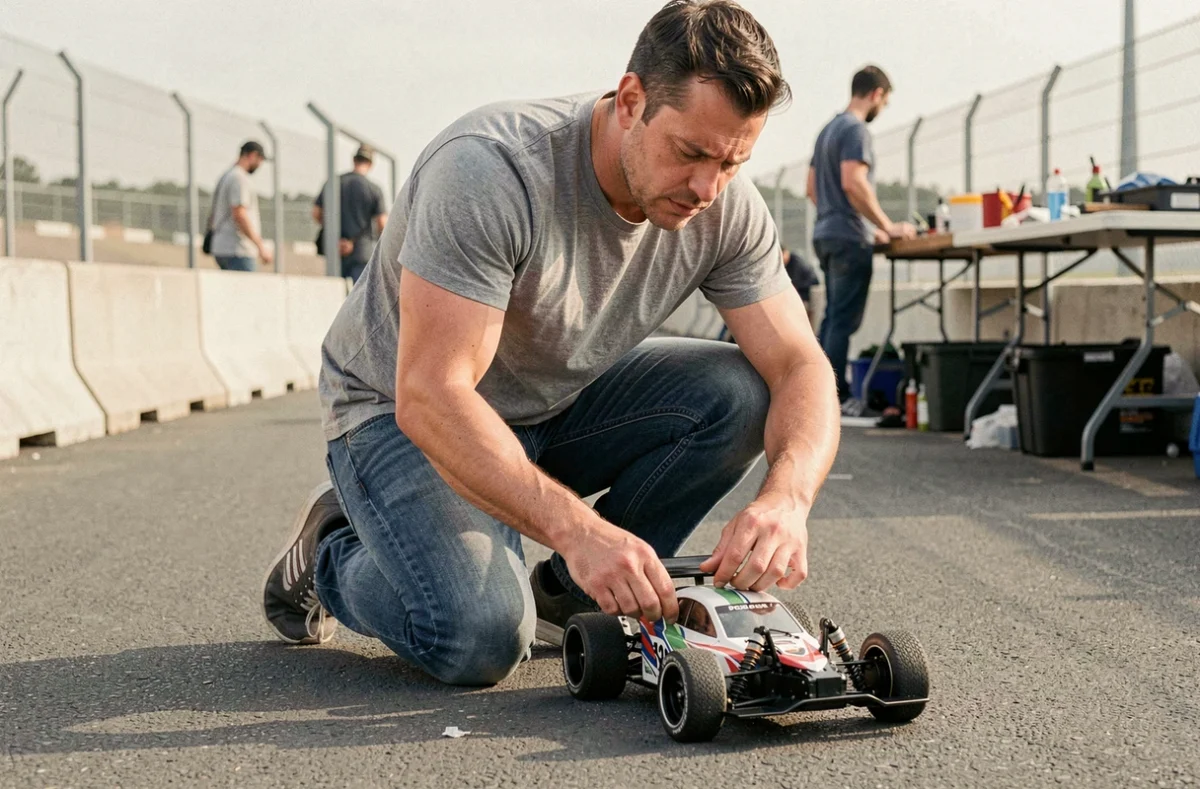
Radio-controlled car modeling relies on a more structured technical ecosystem than it appears. Between federal licenses, motorization choices, and component compatibility, each decision significantly influences the practice. This article provides factual benchmarks to understand what the discipline concretely involves, beyond the image of a simple hobby.
Component Compatibility: The Real First Obstacle in RC Modeling
Buying guides often point towards a brand or RTR (Ready To Run) model. What they rarely specify is that compatibility between battery, speed controller, charger, and connectors constitutes the first roadblock for a beginner.
In electric motorization, a brushless speed controller does not accept the same voltages as a brushed speed controller. Installing a LiPo battery on a setup designed for NiMH without checking the cutoff thresholds of the speed controller can damage the battery or the electronic board. The battery-speed controller-motor chain must be validated as a whole, not component by component.
The recent trend in NiMH batteries is towards low self-discharge and high-capacity models, suitable for occasional users. LiPos offer a better weight-to-power ratio, but their management (partial voltage storage, charger with cell-by-cell balancing) requires additional rigor. Clubs affiliated with the FFVRC also remind participants of these safety constraints during initiation sessions.
Local structures like racing-car-yonnais.fr allow drivers to compare their technical setups in a supervised environment, which facilitates early detection of compatibility issues.
FFVRC License and Access to Official RC Races
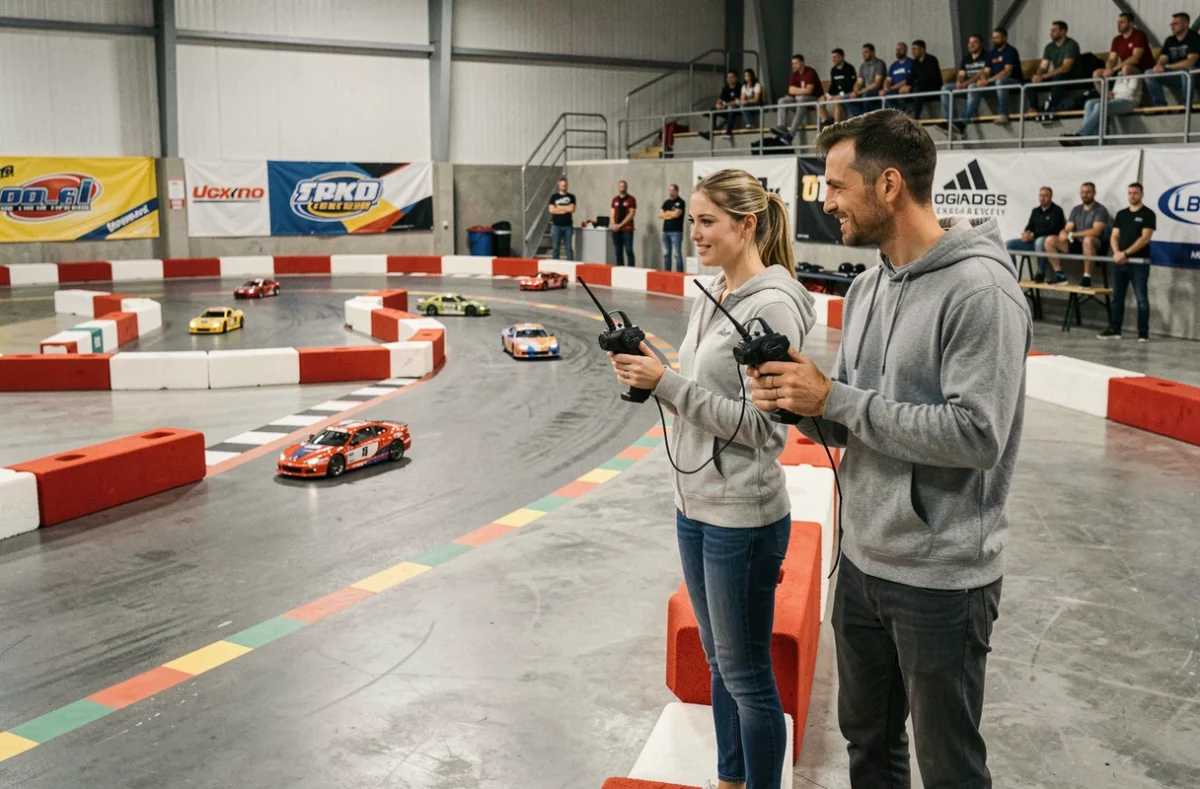
Participating in a friendly race on private land does not require any formalities. However, access to official races requires a federal license issued by the FFVRC. This license covers civil liability insurance during events and club training sessions.
The FFVRC’s general regulations distinguish several types of licenses based on age and level of practice. Rates and conditions are updated each season. One often overlooked point: the license alone does not guarantee the ability to race in all categories. Each club offers specific disciplines based on its infrastructure.
In 1/10 electric off-road, for example, some clubs have dirt tracks with jumps and whoops, while others are limited to a flat layout. The FFVRC recommends checking the compatibility between the owned model and the categories actually offered by the local club before obtaining a license.
Finding a Club Suitable for One’s Discipline
The federation provides a directory by department on its official website. Contacting the club directly remains the most reliable method to know the track opening days, accepted categories, and the general skill level of registered drivers. Feedback from the field varies on this point: a club listed as active may only operate on certain weekends depending on volunteer availability.
Electric or Nitro: Choice Criteria Beyond Power
The electric versus nitro debate resurfaces in all discussions about car modeling. It often boils down to power or sound realism. However, the real usage constraints are more decisive.
- A nitro engine requires precise initial break-in, regular carburetor adjustments, and air filter cleaning after each session. Ongoing maintenance is an integral part of the practice.
- A brushless electric setup requires less mechanical maintenance but imposes strict management of LiPo batteries (storage, charging, inspection of swollen cells).
- The noise of a nitro engine limits practice locations. Some municipalities prohibit the use of combustion engine models in public spaces, which effectively steers users towards electric.
- The cost of use varies: nitro fuel represents a continuous expense, while batteries recharge but lose capacity over cycles.
The choice between electric and nitro alters usage and safety constraints, not just on-track performance. For a beginner, brushed electric remains the simplest entry point: minimal adjustments, limited material risk, and moderate entry cost.
RC Events: Between Competition and Technical Initiation
Recent RC calendar events tend to combine several formats over the same weekend. The RSRC Rush, for example, has integrated competition phases, initiation slots, and technical support for new drivers into its official program.
This hybrid format responds to a pragmatic observation: clubs need to renew their membership to maintain their infrastructure. Opening doors during a competitive event allows curious individuals to see the discipline in real conditions, not just in a parking lot with a toy car.
Local friendly races operate on a similar principle. In Mont-de-Marsan, RCMX organizes open meetings where drivers of all levels run together. The absence of official rankings during these sessions reduces pressure and fosters technical exchange between experienced participants and novices.
What Events Reveal About Equipment Level
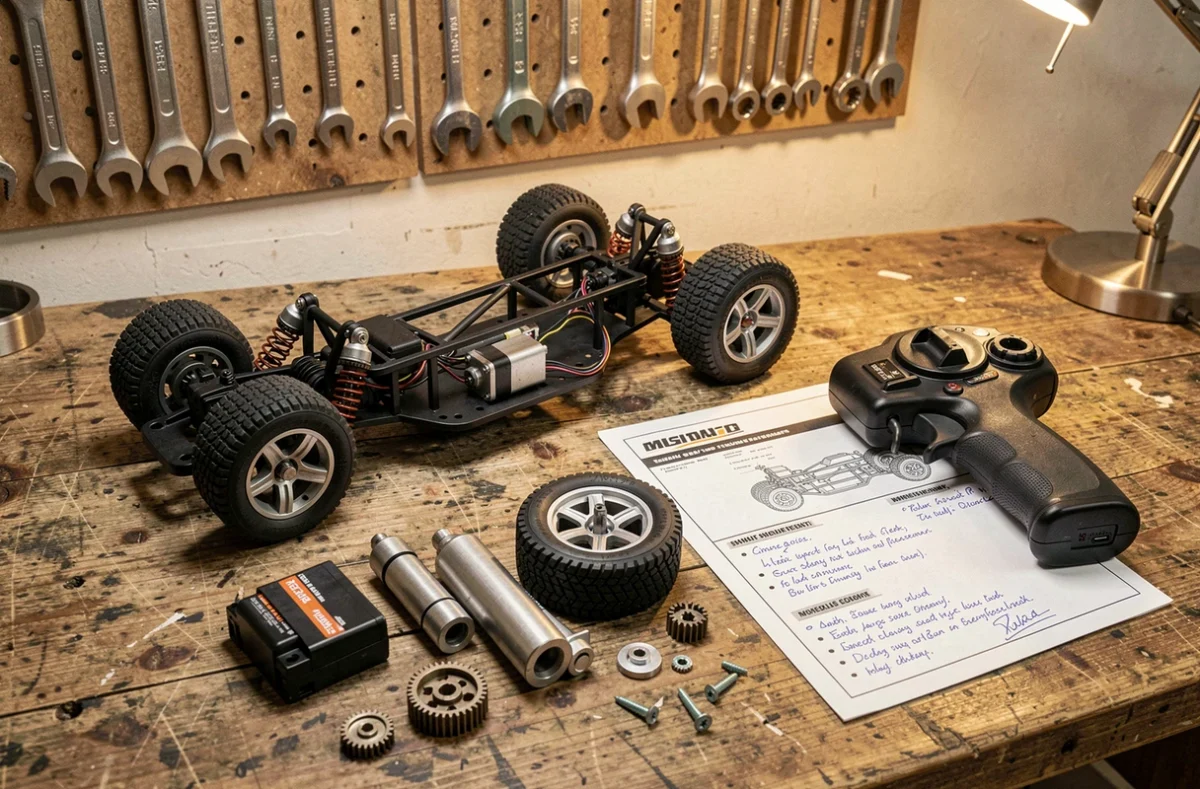
Observing cars on the track during a meeting allows one to gauge the gap between a basic RTR model and a machine prepared for competition. Differences lie in the shock absorbers (oil viscosity suited to the terrain), tires (specific rubber and inserts for the surface), and geometry settings (camber, toe). A well-tuned RTR can hold its own against more expensive models, provided time is invested in adjustments rather than parts.
Radio-controlled car modeling remains a discipline where technical progression takes precedence over budget. The available data do not allow for setting a typical spending threshold, as the differences vary according to categories and each driver’s ambitions. The most reliable approach remains to spend a day at a club, turnkey, to assess whether the mechanics and driving align with what one is looking for.