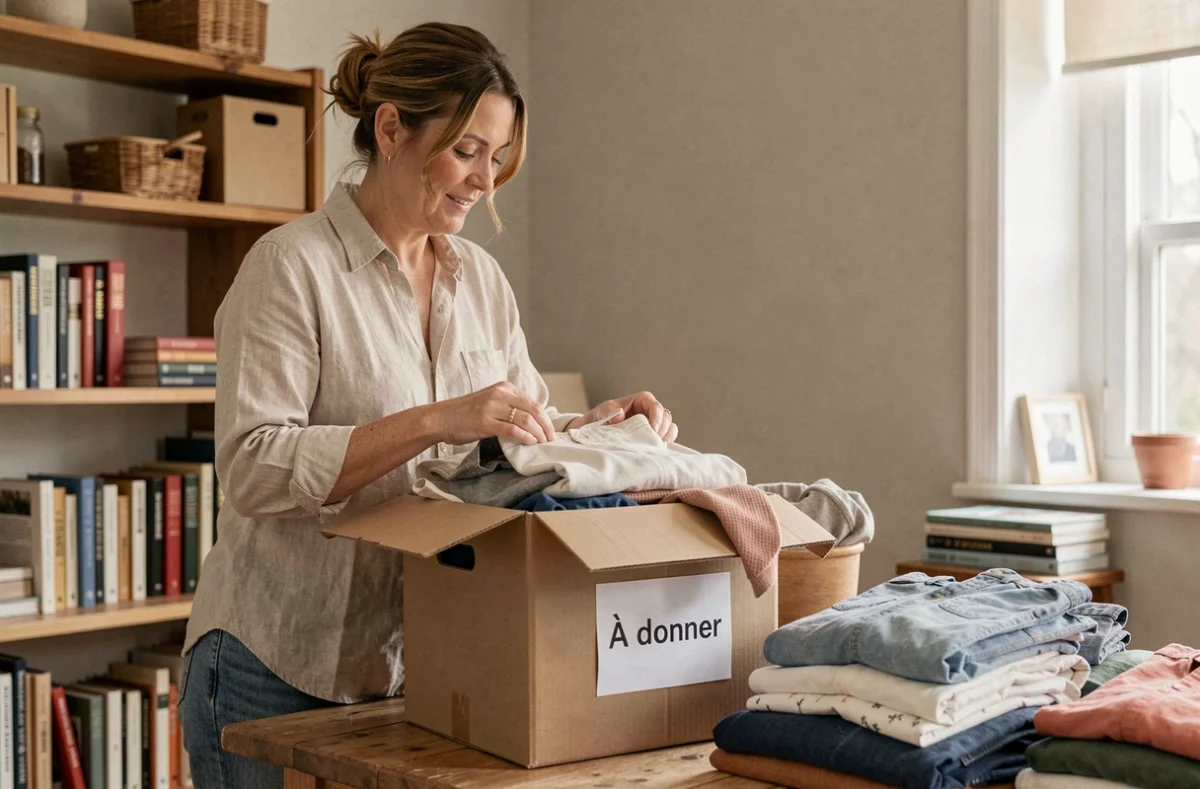
A box of children’s clothes that are too small, a microwave that still works, three mismatched chairs in the garage: we all know that moment when we hesitate between the dump and “we’ll see later.” The trash reflex seems simpler, but it ignores a concrete reality. These still functional items can serve someone else, reduce pressure on waste treatment systems, and limit the extraction of new resources.
What really happens to items dropped off at recycling centers
We often imagine that everything we drop off at a recycling center will be resold. The 2022 data from the National Network of Recycling Centers shows a more nuanced picture: 94% of collected items were valued, but only 44% through reuse. The rest goes to material recycling or other channels.
This discrepancy is explained by the condition of the donations. A toaster with a severed cord, a sofa stained to the point of being unsanitary, or a broken toy will not find a buyer. It will require sorting time, transport, and storage space before being redirected.
For the donation to have a concrete effect, a simple filter should be applied: does the item work, and would someone use it as is? If the answer is yes, the act of donating instead of throwing away makes perfect sense. If the answer is no, it’s better to direct the item to the right sorting or recycling channel.
Textiles donated in France: sorting that makes a difference
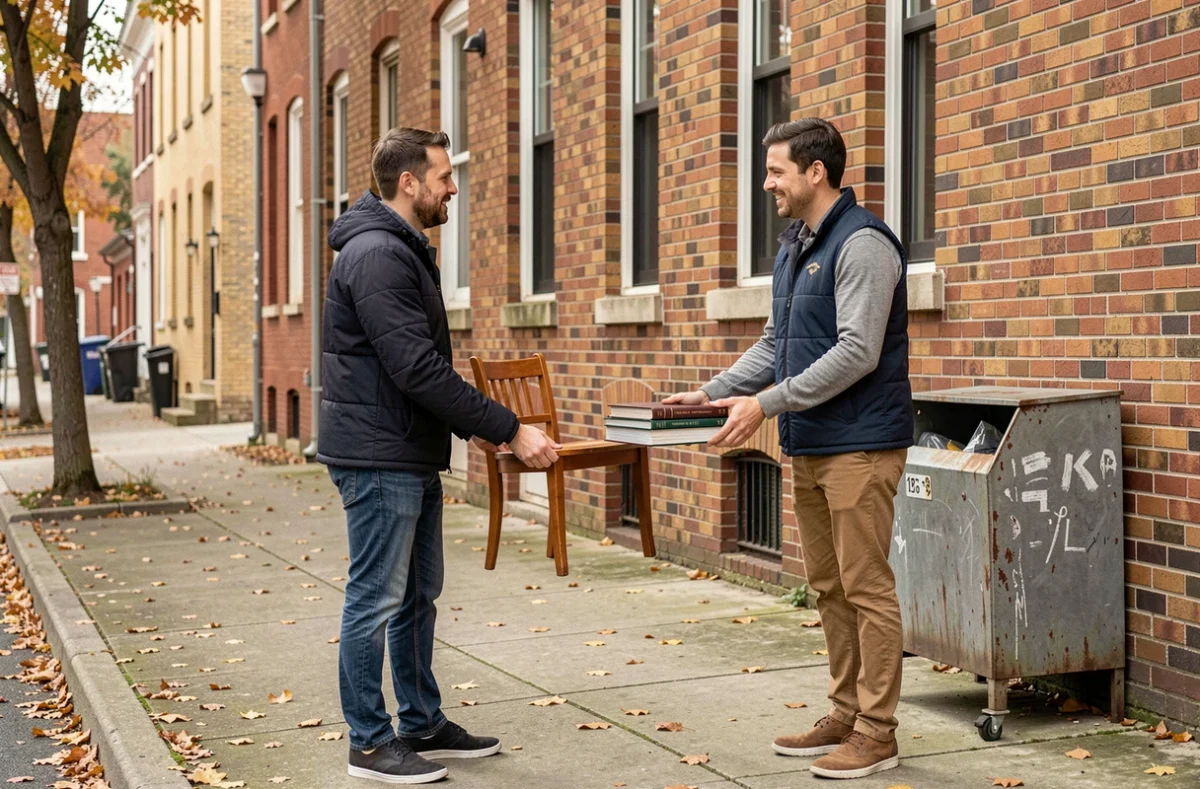
The case of clothing illustrates the problem well. You empty a wardrobe, fill a bag, and drop it off at a collection point thinking everything will be redistributed. In 2024, according to an analysis reported by the National Institute of Circular Economy, only 58.6% of collected textiles were deemed suitable for reuse.
The rest consists of textiles that are too worn, damp, or soiled, which go to shredding, fuel, or landfill. Volunteers at collection associations notice this every fall: clothing deposits explode, but a significant portion is not reusable.
Criteria for a useful textile donation
- The garment is clean, dry, without major stains or persistent odors. A wash before donation is often sufficient.
- Fasteners, buttons, and seams are intact. A discreet tear is acceptable, but jeans with a ripped crotch will not be put back on the shelf.
- Shoes are donated in pairs, tied together, with still-adhesive soles.
Applying these criteria takes only a few minutes and directly impacts the reuse rate in the organizations that collect your donations.
Solidarity shop, thrift store, or online platform: the circuit matters
Not all second-hand channels are equal in terms of impact. A study commissioned by Oxfam compared three circuits: solidarity shops, commercial thrift stores, and peer-to-peer platforms. The result is that solidarity shops have the lowest carbon footprint, particularly due to local collection and redistribution.
The difference lies in logistics. On an online platform, each item is shipped individually, often wrapped in new materials, sometimes over long distances. In a solidarity shop, items arrive in batches, are sorted on-site, and resold just a few kilometers from their collection point.
Choosing your circuit based on the item
For furniture, appliances, or bulky items, recycling centers and local associations remain the most suitable channel. They have collection vehicles and storage space. For clothing and books, returns vary on this point, but dropping off at a textile container or solidarity shop is still more effective than sending individual postal items.
For childcare items or children’s toys, toy fairs organized by schools or community centers allow for direct reuse, without logistical intermediaries.
Reuse and the AGEC law: what the regulations change concretely
The Anti-Waste for a Circular Economy (AGEC) law has established a framework that gradually modifies practices. The ban on destroying unsold non-food items, particularly in textiles, pushes manufacturers and distributors to organize donation or reuse channels instead of sending their stocks to landfill or incineration.
For individuals, the effect is indirect but real. The network of collection and reuse points is densifying because extended producer responsibility (EPR) systems partially fund these infrastructures. Today, there are textile bins, voluntary drop-off points for small electronics, and recycling centers in most French urban areas.
An act that fits into a larger system
Donating an item in good condition is not just an individual act. It is a link in a system that includes collection, sorting, refurbishment, and redistribution. When this link works (clean, functional item, dropped off in the right place), it reduces the volume of waste to be processed and fuels a local economy that creates integration jobs.
When it malfunctions (broken items dropped off in bulk, damp clothing, incomplete devices), it overloads structures and diverts their resources from reuse to waste management.
Sorting upstream, at home, remains the most direct lever. Before dropping off a box somewhere, one can ask a simple question: will this person, upon opening this bag, find something immediately usable? A well-prepared donation is more likely to be reused than a bulk donation. This is where the true second life of items is played out.