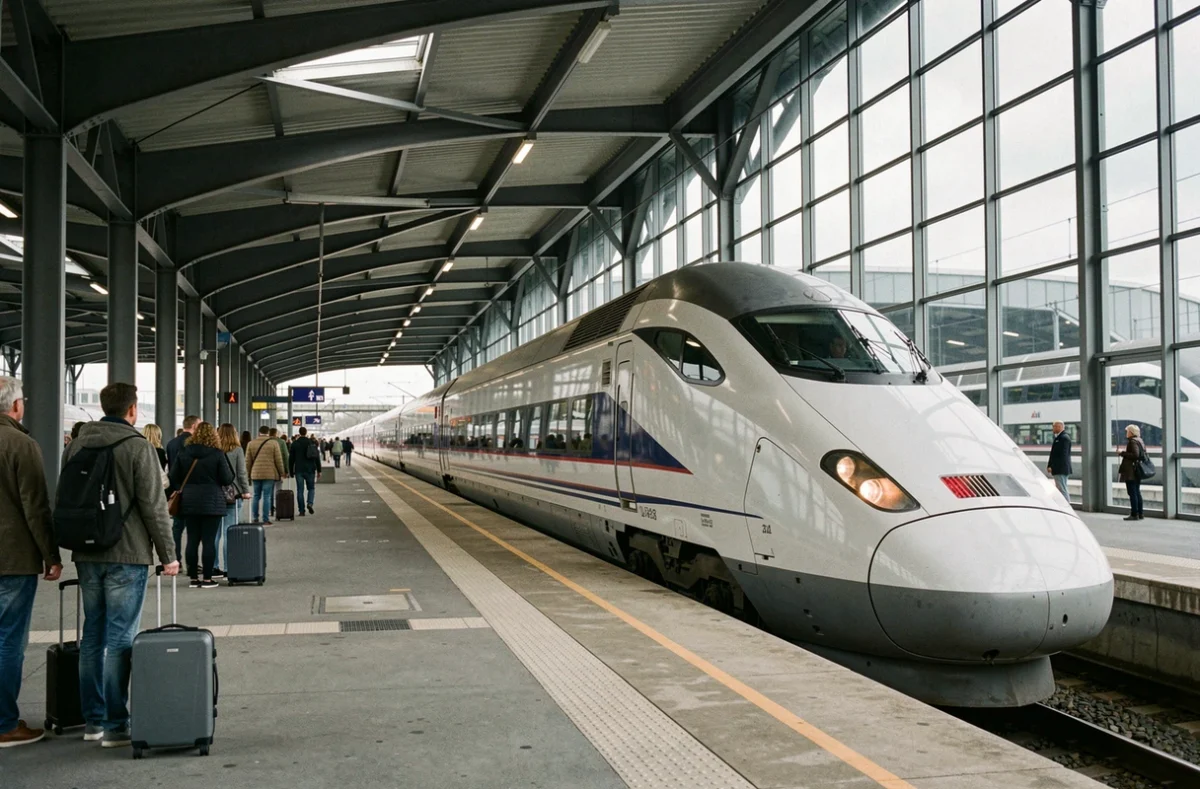
Transport in France is undergoing a period of simultaneous changes: more stringent European regulations, electrification of fleets still hampered by infrastructure, and digital tools that are reshaping the daily management of flows. Since July 1, 2026, light commercial vehicles over 2.5 tons assigned to international transport or cabotage are subject to European rules on driving and rest times.
This regulatory tightening illustrates the growing pressure on the entire logistics chain.
Electrification of Heavy Goods Vehicles: The Bottleneck of Charging Stations
Manufacturers are making numerous announcements about electric trucks. Battery models are gaining autonomy and are starting to find their place on regional routes. The problem is no longer solely on the vehicle side.
The charging network for heavy goods vehicles is still very far behind European objectives. The AFIR regulation requires coverage of 50% of the main road network by the end of 2027, with high-power stations capable of accommodating articulated vehicles. Field reports published by L’Officiel des transporteurs in September 2026 highlight a considerable gap between this deadline and the reality of deployment.
Professionals identify three complementary levels of charging: on major highways, at transporters’ depots, and at shippers’ locations. Charging at the depot remains the cornerstone of economic viability for the majority of uses, because the public network does not yet guarantee reliable rotations without prolonged downtime.
An electric truck that is immobilized longer than a diesel truck to recharge represents a direct additional cost that few small and medium-sized enterprises in road transport can absorb.
Industry players who are keeping informed about these developments can follow the analyses published on the lactuauto.fr website to cross-reference manufacturer data and operational feedback.
Transport Regulation 2026: What Changes for Fleets
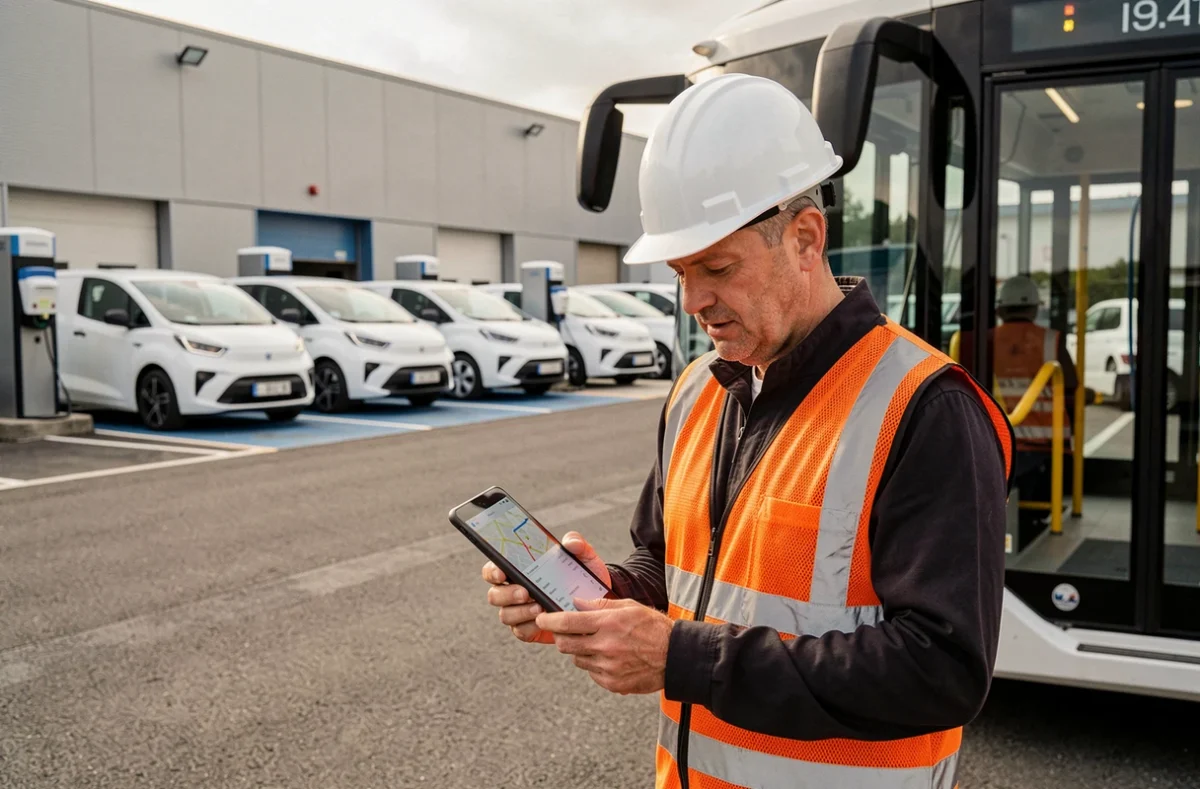
The extension of European social rules to light commercial vehicles over 2.5 tons marks a turning point for urban and suburban delivery companies. Until now, these vehicles were exempt from the driving time constraints applied to heavy goods vehicles. This is no longer the case for international operations and cabotage.
The practical consequences are direct:
- Obligation to equip these vehicles with a smart tachograph, which requires hardware investment and training for drivers on its use
- Compliance with daily and weekly driving time limits, with mandatory breaks that modify the organization of routes
- Increased checks at borders and on the road, with penalties aligned with those applicable to heavy goods vehicles
For transporters operating mixed fleets (light vehicles and heavy goods vehicles), administrative management becomes more complex. Regulatory harmonization requires a revamp of delivery schedules and, in some cases, the recruitment of additional drivers to cover the same volumes.
Low emission zones (LEZ) add another layer of constraint. Access restrictions in French metropolitan areas are gradually tightening, pushing companies to anticipate the renewal of their fleets towards less polluting engines, even when the supply of suitable vehicles remains limited in certain segments.
Inland Freight and Alternatives to Road Transport in France
Road freight transport still accounts for the vast majority of internal French flows. Alternatives exist, but their scaling up faces concrete obstacles that institutional discourse tends to downplay.
Inland freight illustrates this tension well. France has an extensive navigable network, and several projects aim to reintroduce waterways into last-mile logistics, particularly in Île-de-France. The economic model of urban inland freight remains fragile, as highlighted by Le Nouvel Économiste in 2026: handling costs at transshipment points and the low frequency of rotations hinder competitiveness against trucks.
Rail freight faces similar difficulties. The freight branch network has shrunk over the decades, and its rehabilitation requires heavy infrastructure investments. A few corridors remain relevant for bulk flows (construction materials, cereals, port containers), but large-scale modal shift remains more of a goal than a measurable reality.
The available data does not allow us to conclude that these alternative modes will achieve a significant market share in the short term. However, their role as a complement on targeted routes, particularly to alleviate congestion at major metropolitan access points, is subject to experiments that local authorities are closely monitoring.
Digitalization of Road Transport: Beyond Promises
Artificial intelligence and connected management tools are gradually transforming the daily lives of transporters. The start-up Genow has developed Hawkvision, a driving assistance system for heavy goods vehicles that combines onboard AI and camera-radar sensor fusion. It detects overhead obstacles (bridges, tunnels, gantries) in real-time and alerts the driver before impact. The solution has been optimized in partnership with Renault Trucks and Volvo.
Size-related collisions generate considerable costs for transporters each year, often not covered by insurance. This type of innovation addresses a concrete and quantifiable problem, which explains its faster adoption compared to other technologies still perceived as experimental.
Other digital solutions target accessibility. The company Alyce has designed AccessViz, deploying smart sensors in stations and multimodal hubs to detect individuals with specific needs and identify risky behaviors. This technology was tested during the Paris 2024 Olympic and Paralympic Games with RATP and Keolis.
The digitalization of logistics processes is also progressing on the fleet management side:
- Route optimization through algorithms, reducing empty kilometers and fuel consumption
- Real-time tracking of goods via connected objects (IoT), improving traceability for customers and shippers
- Predictive maintenance of vehicles, which reduces unexpected downtime through engine data analysis
Digitalization does not eliminate the structural tensions in the sector (driver shortages, pressure on margins, dependence on fossil fuels). It offers levers for efficiency, but field feedback diverges on this point: adoption remains uneven between large logistics groups and small and medium-sized road transport companies, the latter often lacking the resources to integrate these tools.
The transport sector in France is advancing on multiple fronts simultaneously, with none yet stabilized. Electrification is hindered by infrastructure, regulation is accelerating faster than many companies can adapt, and alternatives to road transport struggle to find their economic balance. The coming months will be crucial to assess whether the announced investments translate into tangible changes on the ground.