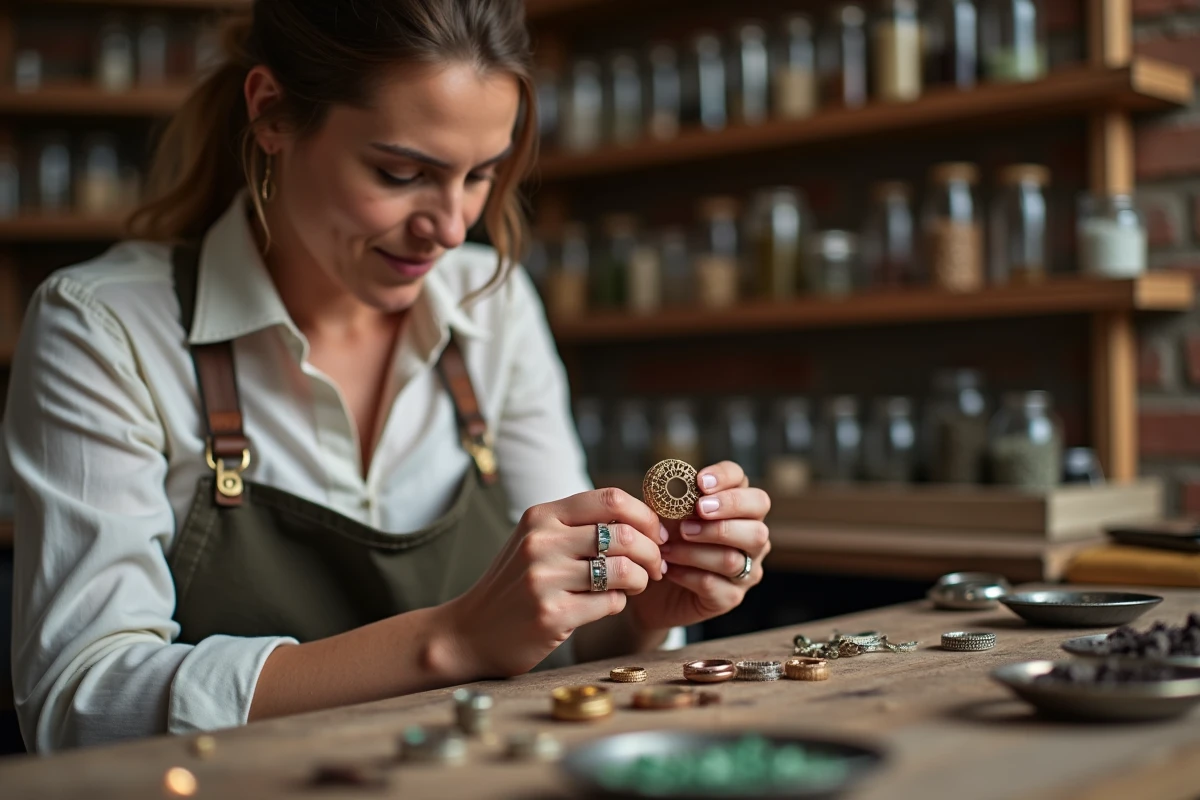
The French market for artisanal jewelry is undergoing a period of reorganization. Driven by what some analysts call “slow jewelry,” demand is gradually shifting from frequent purchases of standardized pieces to fewer, more thoughtful acquisitions focused on material traceability and the sustainability of creations.
Platforms like Etsy France or Un Grand Marché are seeing an increase in searches for terms like “artisanal jewelry,” “handmade,” and “made in France.” This underlying movement is redefining the relationship between the wearer and the creator.
Legal Obligations for Creators of Precious Metal Jewelry
Before discussing aesthetics, it is essential to address the regulatory framework. Artisan jewelers working with gold or silver, even in very small volumes, are subject to specific obligations governed by the General Tax Code and the General Directorate of Customs.
These constraints include the application of guarantee hallmarks on each piece made of precious metal, maintaining a police book tracking every entry and exit of materials, and the systematic identification of suppliers. Customs has reiterated and updated these requirements in 2022-2023 through its dedicated sheets for jewelry manufacturers, which can be consulted on douane.gouv.fr.
For a buyer, these obligations serve as a first filter of seriousness. A creator selling solid silver rings on a marketplace without mentioning a hallmark or a registration number in the trade register raises a legitimate question about the compliance of their pieces. Independent creators offering their collections on byjulie.fr or other specialized sites operate within this framework when using precious metals.
Materials of Handmade Jewelry: What Distinguishes an Artisanal Piece
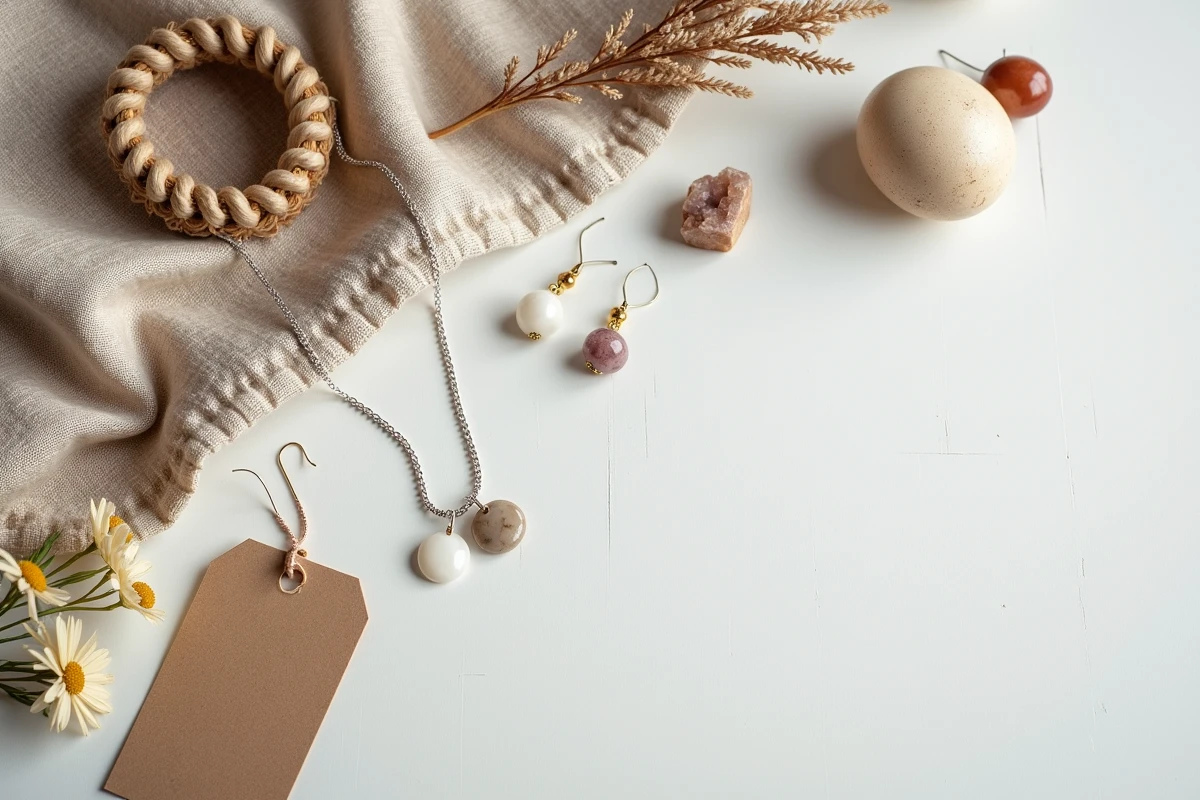
The variety of materials used by creators of handmade jewelry far exceeds the gold-silver duo. Leather, gemstones, steel, gold-plated materials, freshwater pearls, and upcycled materials create a broad spectrum that reflects very different positions.
The choice of material influences the price, durability, and maintenance of the jewelry. Here are the main categories to know:
- Precious metals (gold, solid silver) offer high longevity but impose on the creator the hallmarking and traceability obligations mentioned earlier, which affects the final price.
- Gold-plated and gold-coated steel provide a visual rendering close to gold at a significantly lower cost, with a lifespan depending on the thickness of the plating and exposure to moisture.
- Gemstones and semi-precious stones (labradorite, agate, quartz) add a unique dimension to each piece, as natural variations ensure that no two pieces will be strictly identical.
- Leather and upcycled materials appeal to an audience sensitive to environmental concerns, but their durability over time varies depending on the treatment and quality of tanning.
A noble material does not automatically guarantee a quality piece of jewelry: the finishing, assembly, and care given to clasps or settings are just as important as the raw material.
Labels and Certifications: What Actually Exists for Handmade
Beyond the classic “Made in France,” several certification initiatives are attempting to structure the artisanal jewelry sector. Labels focused on “made locally” or “artisan manufacturing” are emerging, supported by professional associations or collectives of creators.
Field feedback on this point varies. Some artisans view these labels as a trust lever with buyers. Others believe that the membership cost and associated administrative constraints weigh disproportionately on very small structures.
No single label has consensus in the French artisanal jewelry sector. The term “handmade” itself does not have a strict regulatory definition: it can refer to a piece entirely crafted by hand or a piece manually assembled from industrially produced components. For the consumer, the creator’s transparency about their manufacturing process remains the best indicator.
What to Check Before Buying Handmade Jewelry Online
Remote purchasing deprives the customer of physical contact with the piece. A few points deserve special attention:
- The description of materials must be precise: “925 silver” rather than “silver color,” “3-micron gold-plated” rather than “gold-coated.”
- Photos should show the jewelry worn and from multiple angles, with a scale indication (coin, ruler).
- The return conditions and warranty policy provide insight into the creator’s confidence in the durability of their pieces.
Slow Jewelry and Designer Jewelry: A Sustainable Trend or a Fad
The 2024 Etsy report on creative trends and Xerfi’s analyses on jewelry in France point in the same direction: consumers are buying fewer pieces of jewelry but choosing them more thoughtfully. The search for pieces with a story, signed by an identifiable creator, is gaining ground against the interchangeable collections of fast fashion.
However, the available data does not allow us to conclude that this movement affects all price ranges uniformly. The entry-level segment (costume jewelry under twenty euros) remains largely dominated by industrial production, particularly from Asia. Slow jewelry is more relevant to an audience willing to invest in a piece they will wear for several years.
What is truly changing for creators is the direct relationship with the buyer. Social media and direct sales sites allow them to tell the manufacturing process, showcase the workshop, and document each step. This transparency becomes a sales argument as powerful as the jewelry itself.
The handmade jewelry market in France does not offer a simple guarantee. The regulatory framework protects the buyer regarding precious metals, but the term “handmade” remains vague. Labels are multiplying without a unique standard emerging. For the wearer seeking a unique piece, the best approach is to prioritize creators who detail their materials, showcase their workshop, and stand by their manufacturing choices, rather than those who rely solely on appealing storytelling without verifiable substance.